
In March 2026 the Victorian Court of Appeal set aside a $176,297.76 award to a homeowner. He bought an established house, found defects, and claimed on the builder's warranty policy. The cover for the kind of defect he found had run out eighteen months before he owned the place.
01The arithmetic
Four dates decide this case. Nothing else about it is complicated.
He bought a house whose cover for exactly the kind of defect he would find had already expired, and nothing in the purchase told him.
That is not a loophole. It is what the policy said, and the Court of Appeal has now confirmed how to read it.
The homeowner asked the High Court for special leave to appeal. On 6 August 2026 the Court refused it, with costs, finding the proposed appeal had "insufficient prospects of success to warrant a grant of special leave". The Court of Appeal's reading of the policy is now final.
02What the policy actually said
Two clauses decided the case, and they sat under a heading that reads almost as a warning.
How long are you covered for?
Non-structural defects
34. This policy covers loss or damage arising from a non-structural defect occurring during the period commencing on the commencement date and ending 2 years after the completion of the work or the date of termination of the building contract, whichever is the earlier.
Other causes
35. This policy covers loss, damage or expense, from a cause other than a non-structural defect, occurring during the period commencing on the commencement date and ending 6 years after the completion of the work or the date of termination of the building contract, whichever is the earlier.
The tail matters. Cover does not simply run for two or six years from completion. It ends at completion or the date the building contract was terminated, whichever is the earlier. If your builder walked off and the contract was terminated, your clock may have started earlier than you think. Ending a building contract carries its own risk, and a 2026 Supreme Court decision shows what happens when an owner terminates without being entitled to. We have not seen that mentioned in any coverage of this case.
And then there is the phrase in the middle. "Occurring during the period." Everything turned on what those three words attach to.
03Where the two courts split
A disagreement about grammar with a $176,297.76 consequence.
"Occurring" attaches to the defect
- If the builder built the fault in during construction, the policy responds whenever the damage later appears
- These defects were created while the work was being done
- The purchaser is covered
"Occurring" attaches to the loss
- The question is not when the fault was created but when somebody suffered a loss from it
- He could not have suffered loss before he owned the house
- By then the window had shut
The trial judge accepted that the respondent could not have suffered loss or damage before he purchased the property. He simply held that this did not dispose of the claim.
04What the Court of Appeal decided
"We will grant leave to appeal and allow the appeal. The orders of the trial judge giving judgment for the plaintiff, and consequential orders including as to costs, should be set aside and in their place there should be orders dismissing the plaintiff's claim, except in relation to the 11th defect, which it remains necessary to classify as structural or non-structural."
Eleven defects were in issue. The parties accepted that at least ten of them were non-structural, which put them squarely inside the two year clause. The eleventh has gone back to the County Court to be classified, because the Court of Appeal said it was not in a position to decide it on competing expert evidence, adding that given the small amount involved it hoped the issue could be resolved by agreement. There is a second classification that does just as much work on the value of a claim, and it is the line between a defect and incomplete work.
Almost every account of this case describes it as being about mould and water ingress. It was not. The judgment records at [7] that the respondent withdrew his claims concerning installation of the roof, water ingress, mould and inadequate ventilation. Those were not what the appeal was about.
05You can sue, and still recover nothing
The second holding has had almost no attention, and it may matter more than the first.
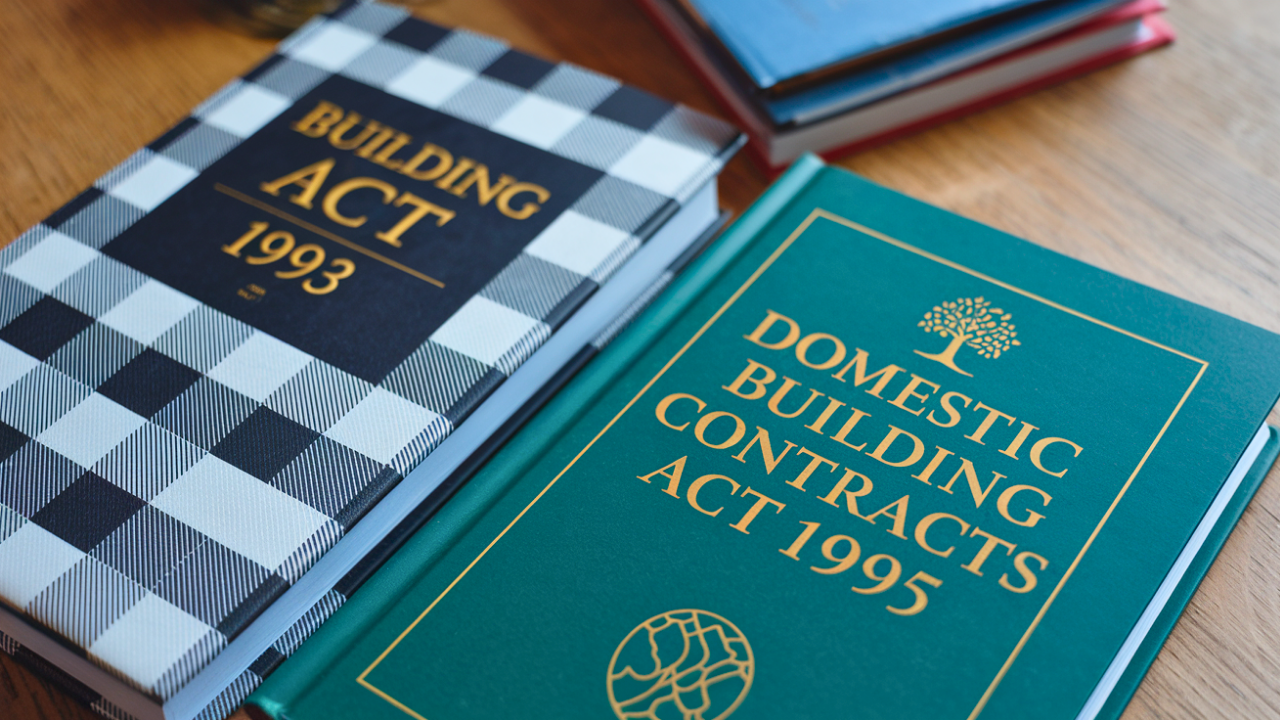
When you buy an established home, the builder's statutory warranties come with it. Section 8 of the Domestic Building Contracts Act 1995 implies them into the contract, and section 9 carries them to later owners. The purchaser argued that section 9 let him step into the shoes of the original owner. The Court disagreed.
"The result was that the successor in title had to prove its own loss and establish an appropriate causal connection between that loss and the breaches of statutory warranty ... Our conclusion, in relation to the similar Victorian provision, is the same."
The Court also quoted Forbes J in Mirvac: "[A] subsequent owner is entitled to damages if a breach of a warranty is established ... That is not to say that a subsequent owner's loss and damage for breach of warranty will necessarily be identical to that of the contracting owner ... Assessment of loss and damage of each owner is a question of fact".
In plain terms: standing is not a remedy. Section 9 gets you through the door. It does not hand you the previous owner's claim. And if you bought the property at a price that already reflected the defects, you may have suffered no recoverable loss at all.
06What this means if you are buying an established home
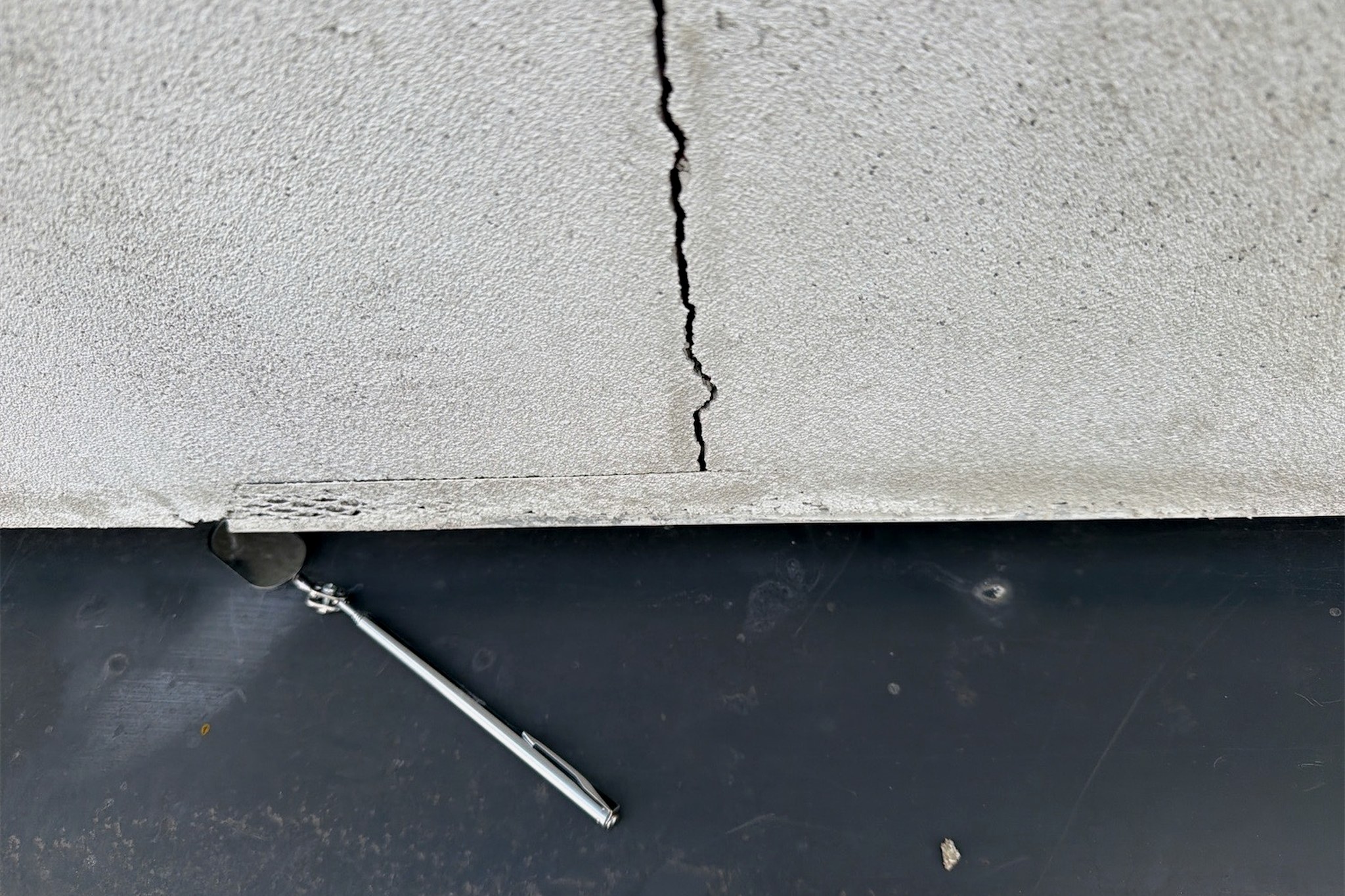
Read those two numbers against how people actually buy houses. A home built and sold, then resold three or four years later, is completely ordinary. So is a defect that takes several years to make itself known.
Where the seller built the house themselves the paperwork is different and the same clock still runs from completion. A section 137B owner builder defects report must come with the contract, and anything written into it is excluded from the insurance.
The window that matters most to a purchaser of an established home is often already closed on the day they get the keys, and there is nothing in a standard conveyance that tells them so.
The practical point is unglamorous. The insurance behind a house is not a substitute for knowing what you are buying. Where the cover has expired, or where you would have to prove your own loss to recover anything, the only thing standing between you and the repair bill is what you knew before you signed.
07What changed on 1 July 2026, and what did not
Victoria replaced domestic building insurance with Home Warranty on 1 July 2026. If the building contract for your home was signed before that date, you are still on a domestic building insurance policy, and this is how its time limits are now read.
Two things carried across. The new scheme keeps a six year period for major defects and two years for everything else. And under the new Regulations a waterproofing or weatherproofing defect is a major defect, which puts it in the six year window by name. Under the old policy considered in this case, the defects were non-structural and sat in the two year clause.
Our explainer on what Home Warranty covers and for how long sets out the new scheme from the Act and the Regulations.
08What to do
- Work out the completion date, and do the arithmetic before you bid. Two years and six years both run from completion of the work, not from your settlement. A four year old house has one window closed already.
- Ask whether a policy exists and what it covers. A certificate of insurance is a document and it can be produced. Knowing the dates on it is worth more than assuming there is cover.
- Get an independent inspection before you sign. It is the only step in the process that tells you the condition of the building rather than the condition of the paperwork, and it is the one that still works after the insurance clock has run out.
A pre-purchase inspection tells you what you are actually buying. The policy behind the house may or may not still be there when you need it.
09Sources
- Victorian Building Authority v Fall-Armytage [2026] VSCA 32
- Fall-Armytage v Victorian Building Authority [2026] HCADisp 173
- Fall-Armytage v Victorian Managed Insurance Authority [2025] VCC 709
- Domestic Building Contracts Act 1995 (Vic), sections 8 and 9
- Domestic Building Insurance Ministerial Order, No S 98, 23 May 2003
- Law Library Victoria, Library Bulletin, Issue 4
- Building (Statutory Insurance Scheme) Regulations 2026 (Vic), S.R. No. 42/2026, regulations 5 and 8
Our Blog
YOUR GO-TO RESOURCE HUB
Whether you’re on the hunt or have already settled in, we’ll arm you with the know-how and confidence to keep your home safe and compliant. With our guidance, you can make informed decisions and steer clear of common pitfalls.