
Building Consultant and Chief Inspector. A registered builder before he was an inspector, which is the part that matters: he supervised and personally installed the work he now assesses. Registered across four jurisdictions, more than two thousand inspections since 2020. Most of the work is pre-purchase, leak investigation and figuring out what is actually wrong with a building. When a matter turns serious enough to need an expert report for a court or tribunal, he writes that himself.
01The short version
If you are deciding whether to engage him, this is what you need.
02Registrations and licences
Every one of these is on a public register. The numbers are here so you can check them rather than take our word for it.
Victoria
New South Wales
Queensland
Australian Capital Territory
His Victorian registration runs continuously from 2012, when he first registered as a Domestic Builder Manager. That registration was superseded in 2020 by the Domestic Builder Unlimited registration listed above, which is the current one.
If you would like to verify any of them, our guide on how to check a builder is registered lists the public register for every state and territory. We would rather you checked.
03Qualifications
Each was awarded by the institution named and can be verified through it.
Building, Home and Construction Inspection
Building Construction Technology
Computer Engineering
Construction Management
White Card
The engineering degree is the unusual one on that list, and it shows up in the work: the habit of tracing a defect back to the specific clause it fails against, rather than describing it and moving on.
04Before the consultancy: the builder years
2012 to 2020. This is the part most inspectors do not have.
From 2012 until around 2020 he was the principal and registered builder of a Victorian domestic building company operating out of Melbourne. It built single-dwelling custom homes and multi-unit developments of up to four dwellings per site, across the inner-northern suburbs. Before 2012 he was working full time in residential construction.
The detail that matters is what he did with his own hands. Concrete slabs. Timber framing. External wall cladding, including lightweight systems and autoclaved aerated concrete panels. Waterproofing of wet areas. Plastering and rendering. Then contract administration with building surveyors, structural engineers, soil testers, plumbers, electricians and cladding specialists, managing multi-trade teams, lodging permits and closing projects out through the statutory warranty period.
That is why a Site Inspections report can say whether something reflects standard practice, departs from the manufacturer's specification, or is a defect. Those are three different findings and they need somebody who has done the work to tell them apart.
05How he actually inspects
Since 2020, against the Code, the Standards and the manufacturer's own installation requirements.

Reports are written against the National Construction Code, the Building Acts and Regulations of the relevant state or territory, the applicable Australian Standards, the State Guide to Standards and Tolerances, and the manufacturer's own installation requirements. Where compliance turns on a measurement, the report discloses the instrument used and the manufacturer's stated reproducibility and uncertainty for that instrument. That is unusual, and it is the difference between a number you can rely on in a dispute and a number somebody can argue with.
The kit is chosen for the question being asked:
The inspections and reports he carries out include pre-purchase property inspections, construction stage inspections at base, frame, lock-up, fixing and waterproofing stages, practical completion and handover inspections, post-handover and warranty-period inspections, building defects inspections, water leak investigations, roofing inspections, thermal imaging inspections, owners corporation reports, dilapidation reports, insurance claim inspections and expert witness reports.
The technical areas he reports on include slab and footing assessment under AS 2870, wet area waterproofing under AS 3740, tiling under AS 3958.1, masonry under AS 3700, timber framing under AS 1684, roof and parapet weatherproofing and drainage under the NCC and AS/NZS 3500.3, cladding and building envelope performance, thermal imaging interpretation, and domestic building insurance claims assessed against the statutory implied warranties and the relevant policy wording.
06Expert evidence
More than forty expert reports since 2020.
Most of those matters resolved by settlement, conciliation, or determination at the Building and Plumbing Commission, Domestic Building Dispute Resolution Victoria, or at insurer claim assessment, without reaching a hearing. He has given expert evidence before tribunals and courts on two occasions, and was cross-examined on each.
Instructions come from homeowners, owners corporations and lawyers acting in domestic building disputes, and he accepts instructions from any party. That includes builders. The reason he can say that without it being a problem is the rule he works to:
The expert’s paramount duty in giving expert evidence is to the Tribunal or Court, and that duty overrides any duty owed to the party who has retained the expert.
One of those matters is a matter of public record, and it is worth reading because of why the Member preferred his evidence. He appeared as the tiling contractor’s expert, not the owners’, in a bathroom renovation dispute:
“I prefer the evidence of Mr Khalil who was able to refer to a specific clause of the AS…”
That is the whole method in one sentence from a tribunal. Not an impression that something looked poor, but the standard it fails against, named, so that anyone can go and check it.
Reports have been prepared on matters ranging from a Melbourne CBD apartment with a contract value of roughly $39 million, through documented slab and footing distress in suburban Class 1a dwellings, to cladding and weatherproofing across multi-unit townhouse developments. Inspections he carried out have been referenced in proceedings that led to a builder being deregistered, and in an ACT Government Stop Work Notice issued after one of his reports.
07The TikTok Inspector
The platform carries a legal edge as well as an audience. In August 2026 the Victorian Court of Appeal held that a homeowner who posted about his builder had also published the comments other people left underneath the video: a Court of Appeal decision on posting about a builder.
How most people find him, and why it is kept separate from the reporting.
None of it was planned. During the Covid slowdown a family member suggested posting videos. He thought TikTok was dancing. The early posts, voiceovers explaining compliance issues, went nowhere. So one day he turned the camera on himself, explained what he was looking at, uploaded it and went to bed. It had tens of thousands of views by morning, and the attention was overwhelming enough that he deleted it.
It did not stay deleted. Since then the audience has run into the millions, across @siteinspections and @zeherkhalil, alongside the Site Talk podcast on Spotify, Apple Podcasts and YouTube. Some of the early production was done in a car parked in the garage, after four children had gone to bed.
It has cost him something. Builders have tried to lock him out of sites, and some have gone as far as asking homeowners to sign contracts excluding him by name. Access sits with the homeowner, and provided the builder has been given notice, it is not the builder's call.
The public work has also become an invitation. In 2025 he was a guest speaker at Victoria University, hosted by its Institute for Sustainable Industries and Liveable Cities, and a keynote speaker at the 2025 RIA Conference and Trade Show, run by the Restoration Industry Association Australasia.
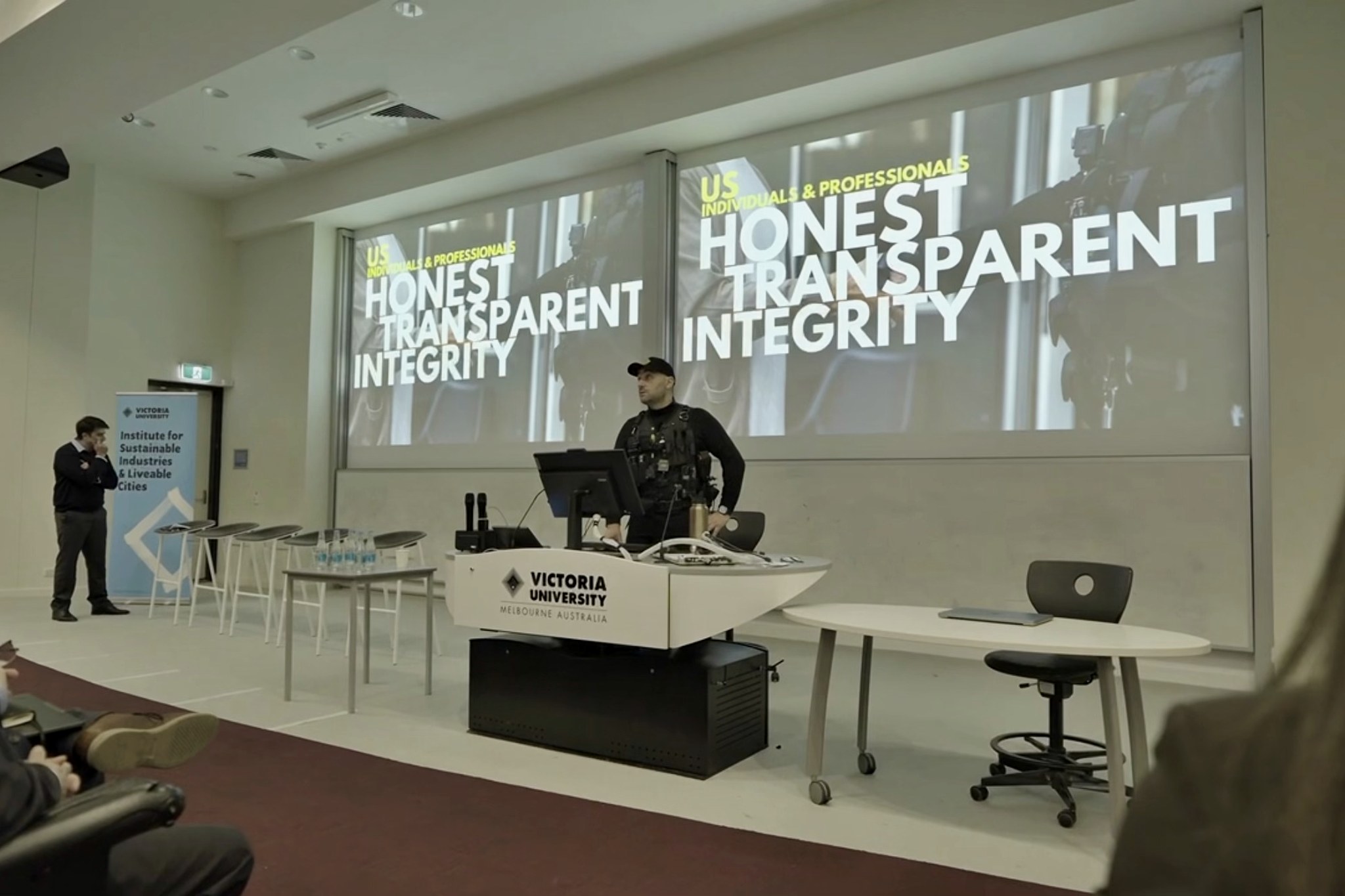
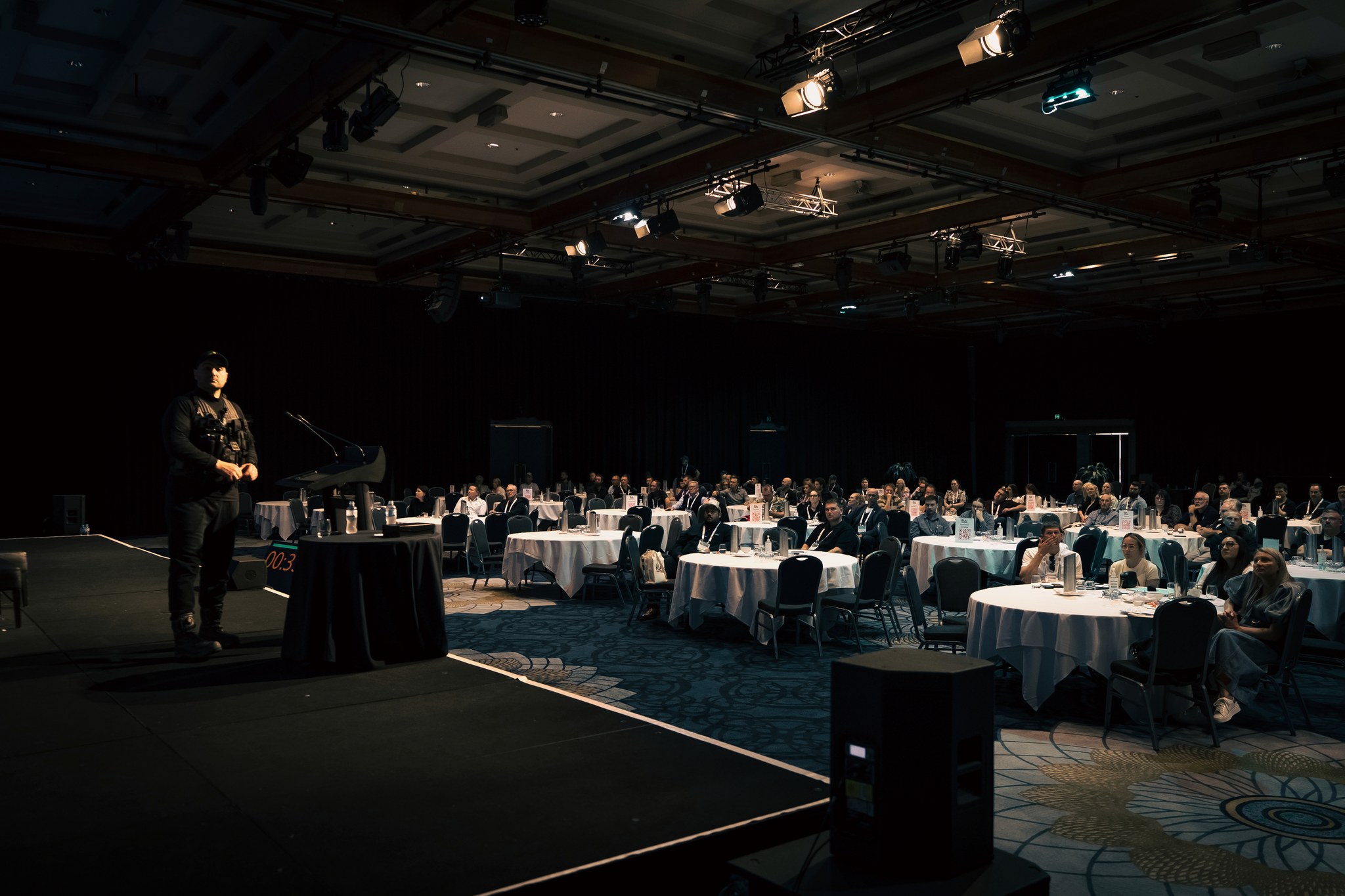
Two of those attempts are worth showing you, because they were not phone calls. They were written into contracts of sale, by two different vendors, and both named him.
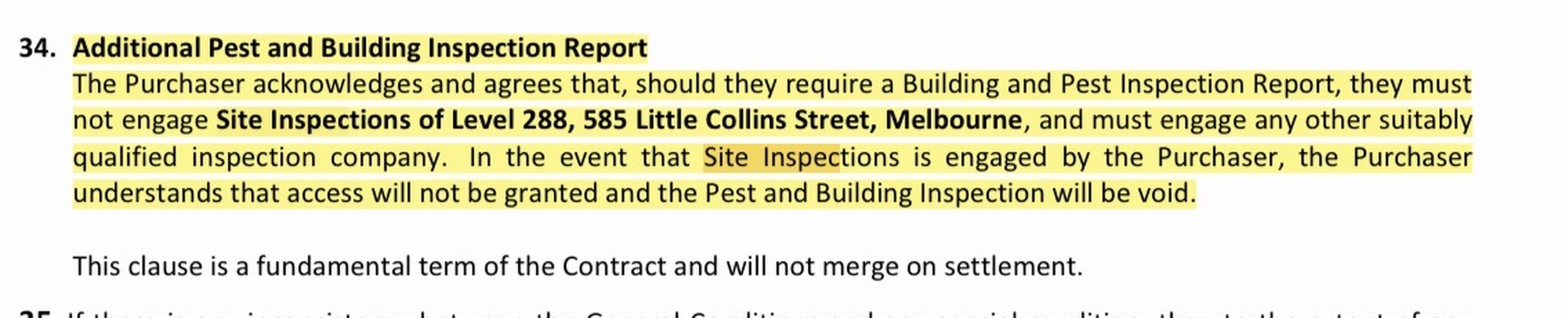

Neither vendor is named here and neither property is identified. The point is not who wrote them. The point is what a clause like that tells a buyer, and it is the most useful thing on this page: a contract of sale that specifies which inspector you may not use is telling you something about the property, not about the inspector. If you are handed one, that is the moment to ask why.
Here is the important part, and it is stated in every expert report he files. The public work and the expert reporting are different registers and are kept apart. Social media content is presented in a consumer-advocacy voice. An expert report is a formal technical document written to the Code of Conduct above, and it is prepared to be assessed on its methodology alone, independently of anything he has said publicly. He is willing to be cross-examined on the public work, and has been.
As he put it to Money magazine: the inspections drive the content, not the other way around.
08In the media
Selected. Not exhaustive.
10What clients actually say
197 public Google reviews, rated 4.9. Four of them, chosen because they describe different things.
“Could not recommend Zeher and his team enough. Not cheap but worth every penny. Picked up faults previous inspector and building surveyor didn’t. Great communication and advice throughout and he doesn’t just leave you after giving you the report. Back up from start to finish. Just wished I used him much earlier in my build.”
“You don’t seek out a forensic level site inspection unless you have found yourself in an unexpected and vulnerable position. Zeher and the team are aware of this and handle the inspection, reporting and any follow-ups with care and empathy.”
“Zeher took the time to speak with me, encouraged me to keep fighting, and later that same evening prepared a technical submission that I was able to include in my Domestic Building Insurance claim. Today, I received confirmation that my claim has been accepted.”
“Honestly we would have spent so much and had years of problems. They were the single best decision we made. Our lawyer, even the mortgage broker when we sent the report to them, everyone was impressed it was the best documentation and referenced all the rules.”
Every one of those is a real, public Google review and you can read the other 193 yourself, including the ones we would not have chosen. That is the point of publishing a rating rather than a testimonial.
11Working with him
Including the question everybody actually wants answered.
What does it cost? Every job is quoted, because no two are the same. A pre-purchase inspection on a single-storey unit and an expert report on a multi-unit cladding dispute are not the same piece of work and should not carry the same price. Send the address and what you are worried about, and you will have a quote back in under 24 hours.
How long until the report? Usually within 24 hours of the inspection. A complex matter can take longer, and an expert witness report takes a few weeks. Lead time to get an inspector out is usually about a week, and if that date suits you it is simply your booking. The wait list only comes into it when you need to be seen sooner than that and we are fully booked.
Where? Victoria, New South Wales, Queensland and the Australian Capital Territory.
Who does the inspection? An inspector from the Site Inspections team, and Zeher reads over every report before it is released. 197 public Google reviews, rated 4.9, and every one of them is real and readable, including the ones we would not have chosen.
What sort of work? Most of it is building defect inspections, carried out either just before handover or after it, where something is clearly wrong and nobody has been able to say why. Every defect inspection includes a check for water leaks as a matter of course. That is the bulk of the practice, and it is what the instruments in section 05 are for.
Alongside that there is construction stage inspection during a build, pre-purchase inspection before somebody commits, and water leak investigation where a leak is the whole problem. And where a matter turns serious and needs an independent expert report for a tribunal or a court, Zeher prepares those himself.
Our Blog
YOUR GO-TO RESOURCE HUB
Whether you’re on the hunt or have already settled in, we’ll arm you with the know-how and confidence to keep your home safe and compliant. With our guidance, you can make informed decisions and steer clear of common pitfalls.