
01What the regulator actually said
On 10 April 2025 the Victorian Building Authority published a consumer alert about Baba Building Group. The Authority became the Building and Plumbing Commission on 1 July 2025, so the alert is the VBA’s, and the page now sits under the BPC’s name.
The alert is short. It says the regulator is warning consumers about “a current investigation into Baba Building Group and its associated entities, including Windsor Homes”, and that “We are gathering evidence into a range of serious allegations against this builder.”
“not building to the permit, non-compliant and defective work and assisting homeowners to occupy incomplete and potentially unsafe homes”
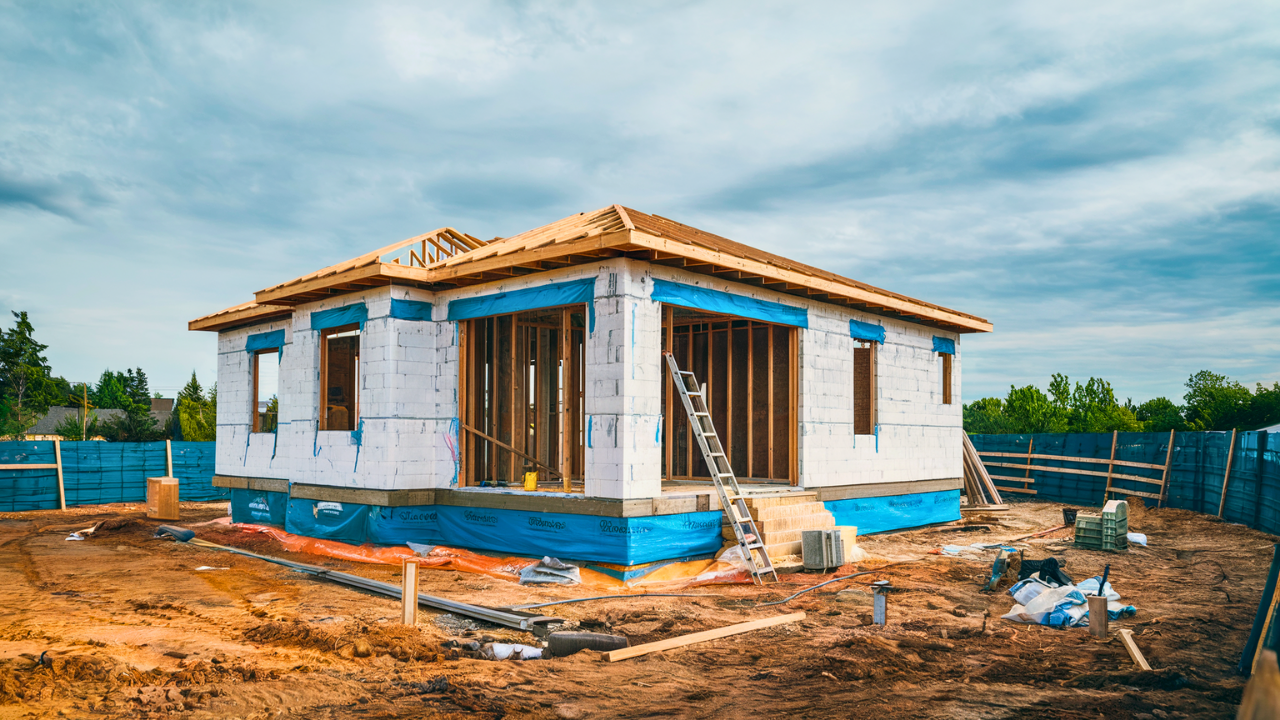
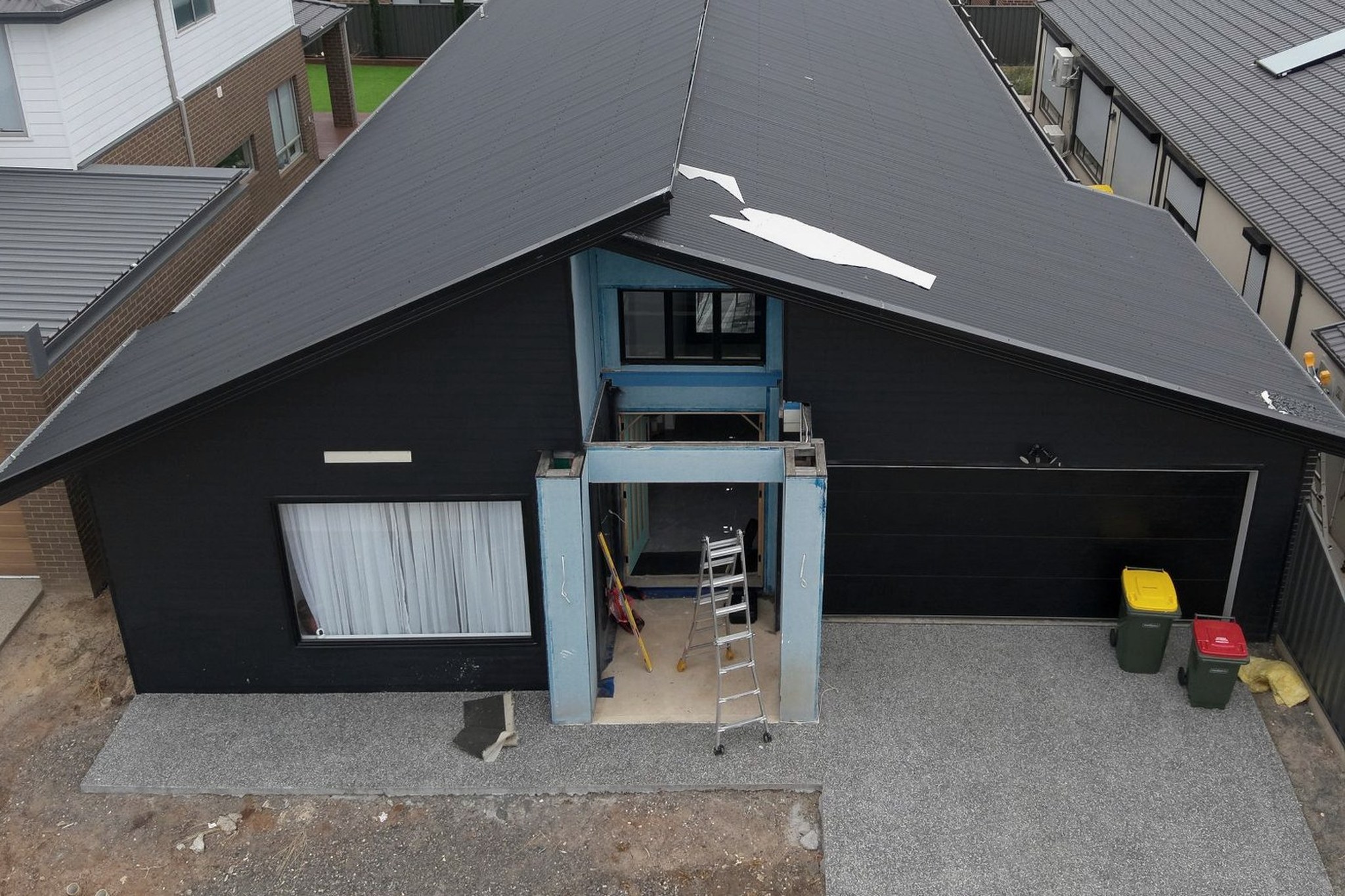
The regulator also said it had ordered the builder and several plumbers back to rectify non-compliant work at sites in Clayton, Officer, Tarneit and Truganina, and that it had addressed any immediate safety concerns. What became of those orders is no longer a blank: the regulator answered it in September 2026, and section 02 sets out what it said.
And then it said this, which is the most important sentence on the page.
“If these claims are substantiated we won’t hesitate to use our full suite of powers to hold those responsible to account.
If they are substantiated. That is the regulator telling readers, in its own words, that at the time of writing nothing had been proven.
The ABC reported the alert the same day, and reported that it was the first time in the Authority’s history it had issued a public warning against a builder. Its report also recorded, in its own words, that “the popular social media personality Zeher Khalil, from ‘Site Inspections’, revealed concerns about Baba in a video posted in February”.
▶Its report included the account of a homeowner, Sonia Ballal, who said she had paid $295,000 for a home at Tarneit, was asked for a further $20,000, showered in cold water from April to October, cooked in the garage because her kitchen was unfinished, and moved in in April 2024 with the home about 60 per cent complete and, as the ABC put it, without an occupancy certificate.
Baba’s project manager, Habeeb Habeeb, told the ABC the allegations were “all lies and wrong information”. Dheeraj Sandala said he “never authorised her to move into the construction site”, attributed the additional $20,000 to “numerous agreed variations” and the delays to COVID-19, and Baba denied breaching permit conditions or safety requirements.
Those denials have not been tested either. Sixteen months on, neither has anything else.
02The charges, filed 7 September 2026
On 7 September 2026 the Building and Plumbing Commission announced that it had filed criminal charges against Baba Building Group Pty Ltd and its director, Dheeraj Sandala. In the regulator’s words, “Baba and Sandala face a total of six charges”.
The regulator sets out how it got there. It says it first inspected the Tarneit site in March 2025, and that the inspection “revealed missing smoke detectors, exposed electrical wiring and structural defects”. A Direction to Fix was issued. The BPC says that “despite multiple opportunities through subsequent inspections up until February 2026”, the builder “failed to comply completely with the direction”.
“failing to comply with a BPC issued Direction to Fix non-compliant building work”; “failing to comply with a statutory notice requiring information on the non-compliant plumbing work”; “failing to carry out building work in accordance with building requirements.”
The release says the charges “include” those three, so they are not necessarily the whole six.
Filing charges is a step, not an outcome. Nothing has been proven, no court has made any finding, and both the company and its director are entitled to defend the charges. The figures below are maximums and they apply only if a court finds the charges proven.
The BPC says the matter “will be heard in the Melbourne Magistrates Court and a further mention is scheduled for 24 September”.
The regulator addresses this directly, and it matters more than the charges to anyone living there: “While the home is still incomplete, the BPC and the building surveyor have conducted inspections at the site and have determined it is safe to live in.” Note who is named alongside the regulator. That is the relevant building surveyor, and section 06 explains why that role keeps appearing.
Where the power to charge comes from
A regulator cannot simply decide to prosecute. The Building Act 1993 says who may bring a proceeding, and it names the regulator directly.
“Proceedings for any offence against this Act or the regulations may be brought by— (a) the Authority; or (b) any person authorised by the Minister or the Authority; or (c) a police officer.”
“The Authority” is the Victorian Building Authority, which trades as the Building and Plumbing Commission. So the BPC does not have to hand a building matter to police or to a prosecuting authority. It can commence the proceeding itself, and that is what it says it has done here.
The same section closes the door the other way. Subsection (6): “No person other than a person authorised by or under this section may bring proceedings for an offence against this Act or the regulations.” A homeowner cannot lay these charges themselves. That is why a complaint to the regulator is the route, and why the evidence you gather early matters so much: somebody else decides whether to prosecute, on the record you helped build.
The Act’s most serious building offences, and why these are probably not them
“Criminal charges” sounds like the top of the scale. It is not, and the difference is worth understanding, because the Act keeps its heaviest building offences in a separate section with an extra ingredient: the person has to have known.
Indictable offences relating to carrying out building work
“(1) A person who is in the business of building must not carry out building work for which a building permit is required if the person knows that— (a) a building permit is required to carry out that work; and (b) a building permit to carry out that work is not in force. Penalty: 600 penalty units or imprisonment for 5 years or both, in the case of a natural person; 3000 penalty units, in the case of a body corporate.
(2) An offence against subsection (1) is an indictable offence.
(3) A person who is in the business of building must not carry out building work if the person knows that the building work is not being carried out in accordance with— (a) this Act; or (b) the building regulations; or (c) the building permit issued in relation to that work; or (d) any binding determination that applies to the carrying out of that work. Penalty: 600 penalty units or imprisonment for 5 years or both, in the case of a natural person; 3000 penalty units, in the case of a body corporate.
(4) An offence against subsection (3) is an indictable offence.
(5) Subsections (1) and (3) do not apply if the building work is exempted by or under this Act or the regulations.
(6) In this section— person in the business of building includes a person who is in the business of managing or arranging the carrying out of building work.”
Two things carry the weight there. The offence needs knowledge, not just a breach. And it is indictable, which puts imprisonment for up to five years on the table alongside the fine.
The BPC’s release does not name a section, so nobody can say from it which provisions the six charges are under. But the release does publish the maximum fines, and those numbers are checkable. A penalty unit is $209.10 from 1 July 2026.
Section 16B carries 3000 penalty units for a company, which is $627,300, and 600 for an individual, which is $125,460. The ordinary summary offences — failing to comply with a direction to fix under s 37H, and failing to build in accordance with the Act and the permit under s 16 — carry 2500 units for a company and 500 for an individual. That is $522,750 and $104,550.
The BPC said “more than $500,000” and “more than $100,000”. Those are the summary figures, near enough to the dollar. So on the regulator’s own published numbers these read as charges under the ordinary offence provisions, not the indictable ones. That is our arithmetic, not the BPC’s statement, and if the Commission names the sections we will correct it here.
It matters because the two carry different consequences. On the summary offences a court can fine. Imprisonment is not available. That is worth knowing before anyone reads “criminal charges” and pictures a different outcome than the one actually in front of the court.
The release also records other rectification work. It says the BPC issued “two Directions to Fix non-compliant building work at Officer and one each at Clayton South and Mt Waverley”, and that “All were resolved under BPC supervision.”
The 2025 alert named “sites in Clayton, Officer, Tarneit and Truganina”. The 2026 release names Officer twice, Clayton South and Mt Waverley. Clayton and Clayton South are different suburbs, Mt Waverley appears only in the later release and Truganina only in the earlier one. We report each release in its own words rather than merging them into a combined list neither one states.
03What a consumer alert is, and what it is not
This is the part most people get wrong, and it is the reason this article exists.
It tells the public that the regulator is investigating. It puts the builder’s name in front of anyone who searches for it. It is the regulator using publicity as a protective tool, at a point where it does not yet have findings.
It is not a finding. It is not a charge. It is not a suspension or a cancellation. It does not appear on the Compliance and Enforcement Register, because that register records outcomes and an alert is not an outcome. And it does not stop a builder trading, signing new contracts, or taking deposits.
Read those two together and the gap between them is the whole problem. Most people read “the regulator warned about this builder” as “the regulator dealt with this builder”. Those are opposite things. One is a warning issued to you. The other is an action taken against them.
The practical consequence: a builder subject to a consumer alert can sign someone up next week, and nothing on the public registers will tell that person why they should look harder.
04What the registers record today
We checked the Victorian practitioner register on 7 September 2026, through the same public data feed that powers our free builder checker. Anyone can run the same search.
Class: Domestic Builder - Unlimited
Status: Current
Commenced: 1 July 2018
Expires: 4 December 2026
Class: Domestic Builder - Unlimited
Status: Current
Commenced: 27 April 2012
Expires: 27 April 2030
We also searched the BPC’s Compliance and Enforcement Register, all 950 records as at 7 September 2026. Neither the company nor its director appears on it: no finding, no penalty, no suspension and no cancellation is recorded against either registration.
That is not a contradiction of the charges, and it is worth understanding why. The Compliance and Enforcement Register records outcomes. Charges filed on 7 September are before a court and have not been decided, so there is nothing for that register to record yet. What it does show is that a builder can be charged and still hold a current registration.
The BPC’s building permit suspensions page carries no entry for them either, and the consumer alert remains the only page on the BPC website that mentions Baba Building Group. No follow-up statement has been published in the sixteen months since.
These are negative results from public registers. They mean no outcome has been recorded. They do not mean the regulator has stopped work, and they do not mean anything has been decided in the builder’s favour. An investigation that is still running produces no register entry at all.
We put that question to the BPC directly. We asked whether the investigation announced on 10 April 2025 remains open, whether any action has been taken since, and whether the rectification orders at those four sites were complied with. This article will be updated with their answer.
05Timeline
Every entry below is dated and sourced. The 16 February and 10 April 2025 entries sit 53 days apart. We state the sequence and nothing more: no source we have found says our video caused the regulator’s alert, and we do not claim it did.
-
7 SEP 2026Six criminal charges filedRegulatorThe BPC announces it has filed criminal charges against Baba Building Group Pty Ltd and its director. The matter goes to the Melbourne Magistrates Court. Nothing has been decided.
-
7 SEP 2026Both registrations still Current after the chargesRegister checkChecked the same day the charges were announced. Both registrations remain Current on the Victorian practitioner register, and neither the company nor its director appears on the Compliance and Enforcement Register, which records outcomes rather than pending charges.
-
27 AUG 2026Questions put to the BPCSite InspectionsWe asked whether the investigation remains open, whether any action has been taken since, and whether the rectification orders were complied with. This page will be updated with the response.
-
FEB 2026Direction to Fix not fully complied withRegulatorThe regulator says that “despite multiple opportunities through subsequent inspections up until February 2026”, the builder “failed to comply completely with the direction”.
-
10 APR 2025The VBA publishes its consumer alertRegulatorThe Victorian Building Authority warns consumers about its investigation, and says it has ordered the builder and several plumbers back to rectify non-compliant work at sites in Clayton, Officer, Tarneit and Truganina. The ABC reports it the same day.
-
10 APR 2025The builder denies the allegationsResponseBaba’s project manager tells the ABC the allegations are “all lies and wrong information”. Dheeraj Sandala denies authorising the homeowner to move in, and Baba denies breaching permit conditions or safety requirements.
-
MAR 2025The BPC inspects the Tarneit siteRegulatorThe regulator says this inspection “revealed missing smoke detectors, exposed electrical wiring and structural defects”, and that a Direction to Fix was issued.
-
16 FEB 2025We publish our videoSite InspectionsSite Inspections publishes a video about a home built by Baba Building Group.
-
1 JUL 2018Baba Building Group Pty Ltd registeredBaselineRegistered as a Domestic Builder - Unlimited, CDB-U 52933.
-
27 APR 2012Dheeraj Sandala registeredBaselineRegistered as a Domestic Builder - Unlimited, DB-U 38636.
-
24 SEP 2026Further mention, Melbourne Magistrates CourtScheduledA further mention is scheduled for this date.
-
4 DEC 2026Company registration due to expireScheduledCDB-U 52933 is recorded as expiring on this date.
06The occupancy permit, and the two things almost nobody knows about it
The regulator’s alert refers to homeowners being assisted to occupy incomplete homes. That phrase does a lot of work, and it is worth unpacking, because the law here surprises people.
Who actually issues it
Not the regulator. Under the Building Act 1993, an application for an occupancy permit “must be made to the relevant building surveyor” (s 41).
The relevant building surveyor must decide an application for an occupancy permit by “issuing the permit”, “issuing the permit with conditions”, or “refusing the permit”.
Note the middle option. A permit can be issued with conditions, and a conditional permit is not the same thing as a clean one. And under s 44(1)(a) the surveyor must not issue one “unless the building, or the part of the building, to which the permit applies is suitable for occupation”.
So if you are waiting on a permit, the person deciding it is your building surveyor. The regulator’s role is different: it can order defective work rectified. It does not hand you the permit at the end.
What the permit proves, and what it does not
“[An occupancy permit under this Division] is not evidence that the building or part of a building to which it applies complies with this Act or the building regulations.
Section 46 says an occupancy permit is evidence the building is suitable for occupation. Then subsection (2) says it is not evidence that the building complies with the Act or the building regulations.
That distinction is worth more to a homeowner than almost anything else in this article. A permit is evidence that the place is suitable to live in. It is not proof, it does not certify that the work is compliant, and it does not mean your defects are gone. Plenty of people stop pursuing defects the day the permit arrives, believing the permit settled the question. It did not.
And the part that catches homeowners out
Where a building permit requires an occupancy permit, the Act says “a person must not occupy that building unless the occupancy permit has been issued under this Division for the building” (s 39(1)). Read that carefully, because the wording matters: the offence is committed by the person who occupies. It puts the obligation on the occupier; it does not shift it to whoever told them it was fine.
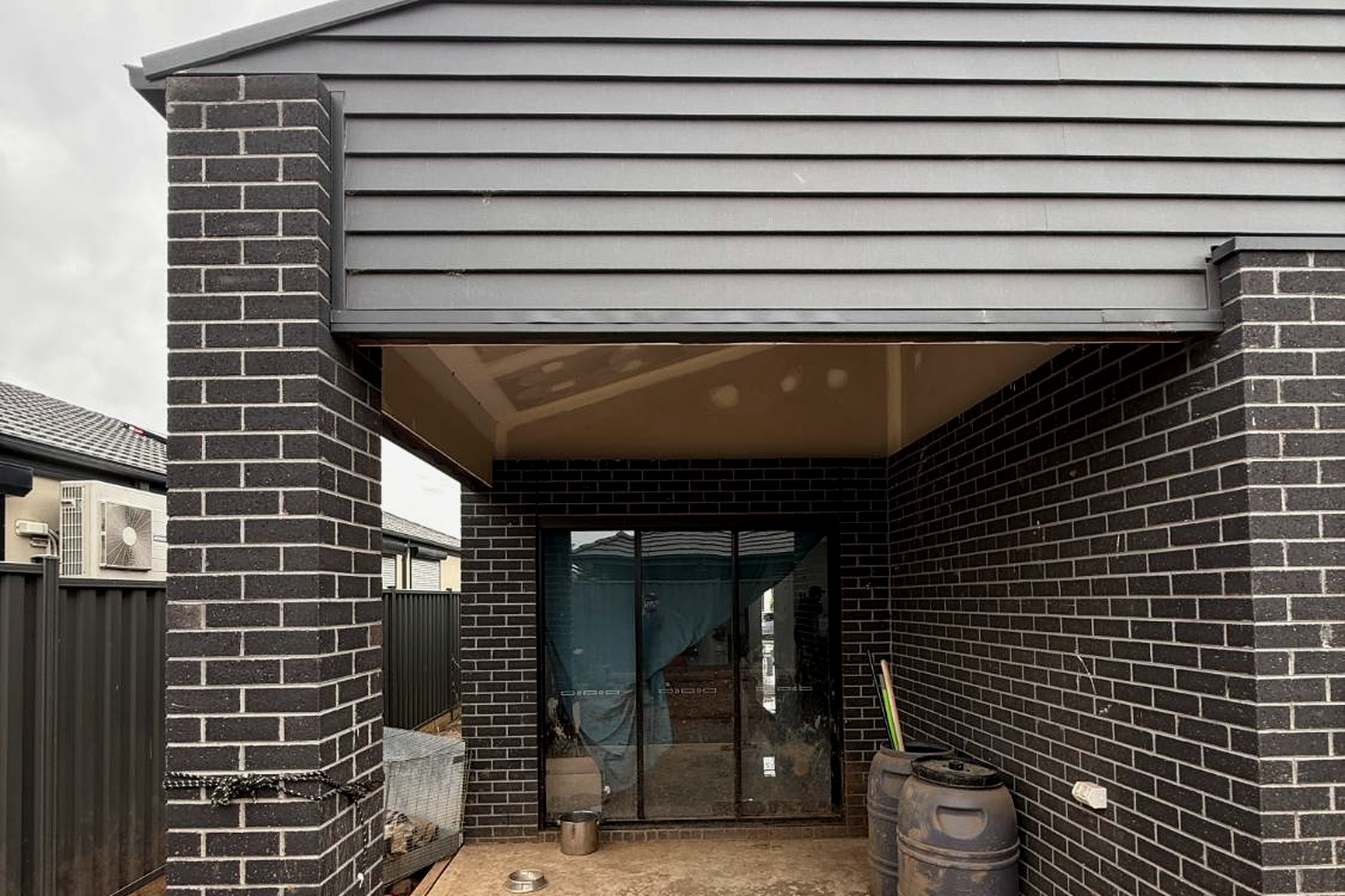
We are not suggesting homeowners in this position are routinely prosecuted. The enforcement focus in matters like this is on practitioners. The point is narrower and more useful: the Act puts the obligation on you, so the question of who told you to move in, and whether that is in writing, is not a small detail.
That is precisely why “assisting homeowners to occupy incomplete and potentially unsafe homes” is such a serious thing for a regulator to allege. If it happened, the legal exposure lands on the homeowner, in their own name, for moving into their own house.
07What this means for you
- Check the register before every progress payment, not just before you sign. A registration status can change mid-build, and a consumer alert will not show up in it at all. It is free and it takes about thirty seconds.
- Get the permit position in writing. Before you move in, ask your relevant building surveyor, in writing, whether an occupancy permit has been issued, and whether it carries conditions. Under s 39 the obligation not to occupy without one falls on you.
- If anyone asks you to move in before the permit issues, get advice before you do, and not from the person asking. The BPC publishes a free advice line on 1300 067 088 and an issue-screening tool on its website. Consumer Affairs Victoria publishes free guidance on building and renovating. Neither costs anything.
- Document the state of the build now. Photographs, dates, and a written record of what is and is not finished. If anything later turns on the condition of the property, that record is what the argument is decided on, and it is far harder to reconstruct afterwards.
Under Victorian law, none of the above requires you to pay anyone. The register is public, the Act is public, and your building surveyor already has a duty to decide your application.
08Checking a builder yourself
Our free builder checker queries the Victorian practitioner register live, and shows the enforcement and insolvency records alongside it. It is the same data used in section 03, and you can check any Victorian builder yourself.
We have written the full walkthrough elsewhere rather than repeat it here. If you want to know what each status field actually means, read the full walkthrough of each status field. If you have seen a registration marked Suspended, read the two very different things “Suspended” can mean before you draw a conclusion from it.
The registers record what they record. About a third of enforcement records carry no registration number, and the regulator’s own wording is that not every complaint, enquiry, inspection or compliance activity appears on the register. The absence of an entry is the absence of a recorded outcome, and nothing more than that.
09Sources
- BPC files criminal charges against Baba Building Group Pty Ltd and its director
- Consumer Alert - Baba Building Group
- Register of Building Practitioners (Victorian practitioner register)
- The Compliance and Enforcement Register
- Australian Business Register, ABN 72 167 523 042
- Building Act 1993 (Vic), authorised version No. 150, ss 39, 41, 43, 44(1)(a), 46
- Penalties and values: one penalty unit, $209.10 from 1 July 2026
- Victorian watchdog sounds alarm on Melbourne builder’s ‘defective work’
Our Blog
YOUR GO-TO RESOURCE HUB
Whether you’re on the hunt or have already settled in, we’ll arm you with the know-how and confidence to keep your home safe and compliant. With our guidance, you can make informed decisions and steer clear of common pitfalls.