A builder quoted $2,188,482 for a three-storey house. The owners could not afford it. He offered to do it for $1.71 million, on one condition: $110,000 of it in cash. They agreed, and paid $50,000 of that cash before the job fell apart. On 4 June 2026 the Court of Appeal held the cash agreement void, ordered the builder to repay every dollar of it, refused him leave to appeal, and left his claim for $365,746.78 of unpaid work valued at nil. The reason it came to nothing is the part every homeowner should read: defective brickwork low in the build meant the stages above it were never complete.
01What the Court of Appeal decided
The disposition, before anything else.
“For the above reasons, with respect to the builder’s application for leave to appeal, we would refuse leave to appeal on both grounds. With respect to the application for leave to cross-appeal, we conclude that the Court has no jurisdiction with respect to proposed ground 1. We would grant leave to appeal on ground 2, allow the cross-appeal on ground 2, and order that the builder pay to the owners $50,000 forthwith.”
The builder had sued in the Tribunal for $729,112.03 in damages, comprising unpaid progress payments, variations, delay claims and interest, with the quantum meruit claim as his alternative. He recovered none of it, and left owing $50,000.
The case has been written up several times since June, and every summary we have seen leads on quantum meruit, which is the lawyers' interest. That is not the part a homeowner needs. The part a homeowner needs is why the builder's claim was worth nothing, and it has nothing to do with restitution doctrine. It is about brickwork.
02The deal, and the sentence that undid it
Two contracts, signed the same day.
The builder had quoted $2,188,482 to build a three-storey house. The owners could not afford it, so the scope came down. At a meeting in early April 2017 the builder's sole director made an offer, and the Court records his words:
“he would ‘do it for $1.71, but I want $110 in cash. Tradies love cash and it’s cheaper to use cash when you hire them’.”
On 5 May 2017 the parties signed a Master Builders Association HC6 contract for a price of $1,600,000. On the same day they signed a second document, which the Court calls the side agreement, recording a “Total Construction Cost” of $1,710,000. The extra $110,000 was to be paid in cash instalments, triggered by the very same milestones as the contract payments.
In the contract itself the parties agreed that the progress payment stages fixed by section 40 of the Domestic Building Contracts Act would not apply, which the Act permits, and adopted their own schedule instead. It was set out as six stages:
Note how the contract defined the two stages that end up mattering. Base stage, for a home with a suspended concrete slab floor, meant when the concrete footings are poured. Frame stage meant when the home's frame is completed and approved by the building surveyor. Both are completion tests, and completion is not the same thing as a truck having left the site.
The work started in July 2017. Ground plumbing and base stage were completed and paid. The ground floor frame was finished around 10 October 2017 and the owners' financier paid the $160,000. Alongside all this the owners paid cash under the side agreement: $30,000 on 1 August, $10,000 on 6 September, and a third payment on 31 October. Fifty thousand dollars in cash, before relations soured at a meeting near the site in January 2018.
03Why a cash deal on the side is void
And why opting out of the standard stages does not make it legal.
The builder's argument was that because the parties had lawfully opted out of the standard payment stages, they were free to arrange payments however they liked. The Court disagreed, and the reasoning is worth following because the same argument gets made on sites every week in less formal language.
a builder must not “demand or recover or retain under a major domestic building contract … more than the percentage of the contract price listed in column 2 at the completion of the stage referred to in column 3”
Opting out swaps one payment schedule for another. It does not switch off the protection:
“an alternative payment regime under s 40(4) substitutes for the table in s 40(2), but ‘does not open the door to collateral agreements and additional progress payment tables that are clearly outside what is contemplated by the [Act]’.”
The builder then argued the side agreement was not a domestic building contract at all, merely a collateral one. The Court treated that as beside the point:
“The important question is whether it was a ‘domestic building contract’, which is defined in s 3(1) to mean ‘a contract to carry out, or to arrange or manage the carrying out of, domestic building work other than a contract between a builder and a sub-contractor’.”
“Section 40(2) therefore expressly prohibited the builder from ‘demanding, recovering or retaining’ funds under the side agreement. The side agreement was therefore void by reason of s 132(1) of the Act, with the consequence that the builder had no contractual entitlement to the balance of the amounts specified in that agreement.”
Nor could the builder route around it by claiming the value of the work instead. Applying an earlier Court of Appeal decision, Stephens v Cameron:
“for the applicant to pursue a quantum meruit claim would be to seek the very payment for work done which the statute forbids. The coherence of the law and the need to avoid stultifying the statutory purpose of s 40(2) mean that this could not be permitted”
There was one escape route available and the builder did not take it. The stated purpose of the cash was to pay subcontractors, and the Court noted that a builder who had actually disbursed the money that way might have had a defence of change of position. But no evidence of any such disbursement was led:
“the builder was aware that the owners sought to recover the $50,000 already paid under the side agreement, yet the builder did not lead any evidence that it had disbursed those funds to subcontractors. Having chosen not to advance such a defence, it is bound by the conduct of its case.”
04A defect at base stage made every frame stage incomplete
This is the finding that decided the money, and no summary of this case leads with it.
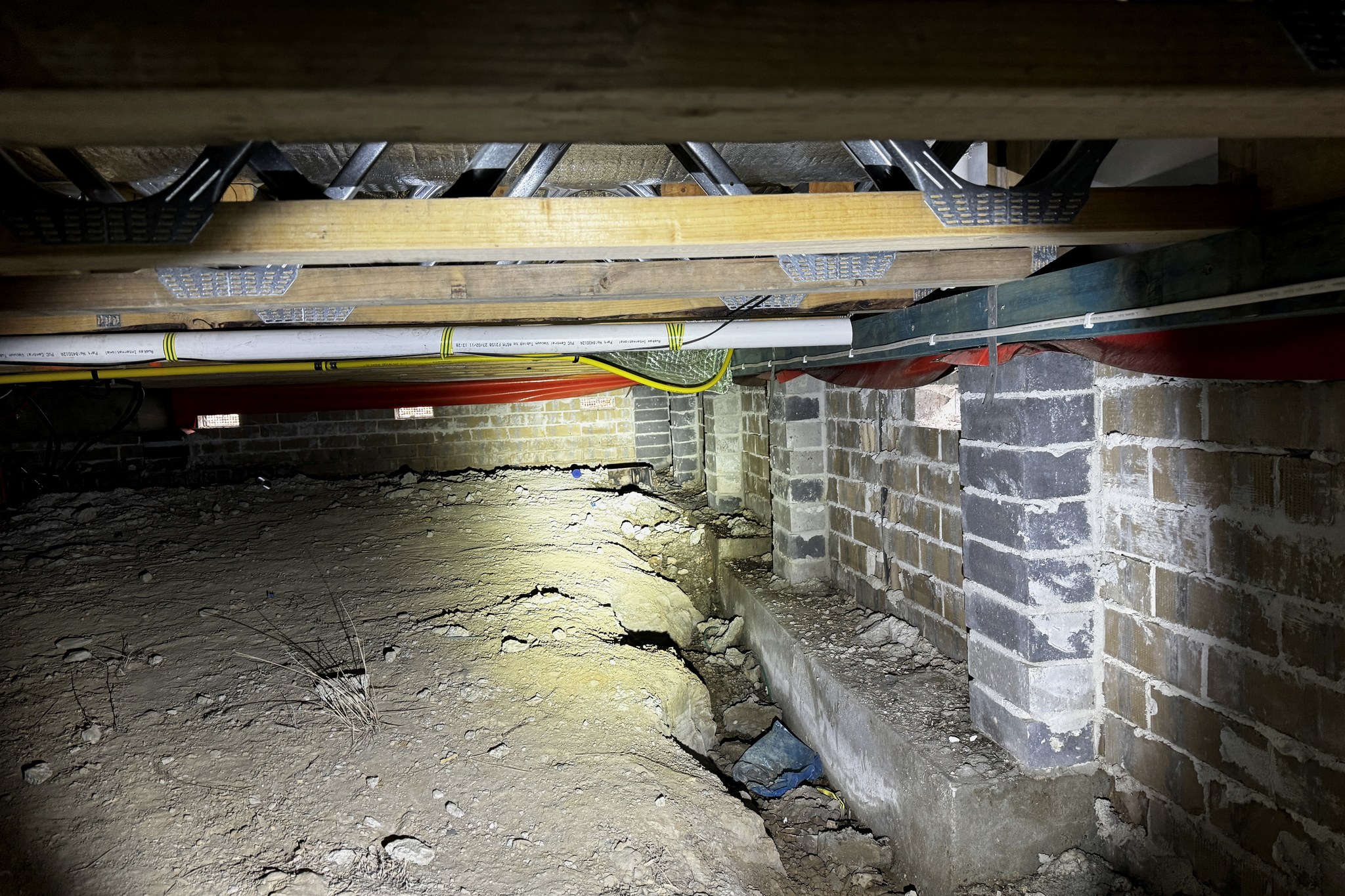
“The President held, in reasoning that is not challenged, that substantial defects in the structural brick columns that formed part of the base stage meant that the base stage was incomplete. It followed from that conclusion that ‘each of the frame stages was also incomplete’. On that basis, the President held that the builder did not have a contractual entitlement to the progress payments for either the base or frame stages (although the builder had in fact been paid the progress payments for the base and ground floor frame stages).”
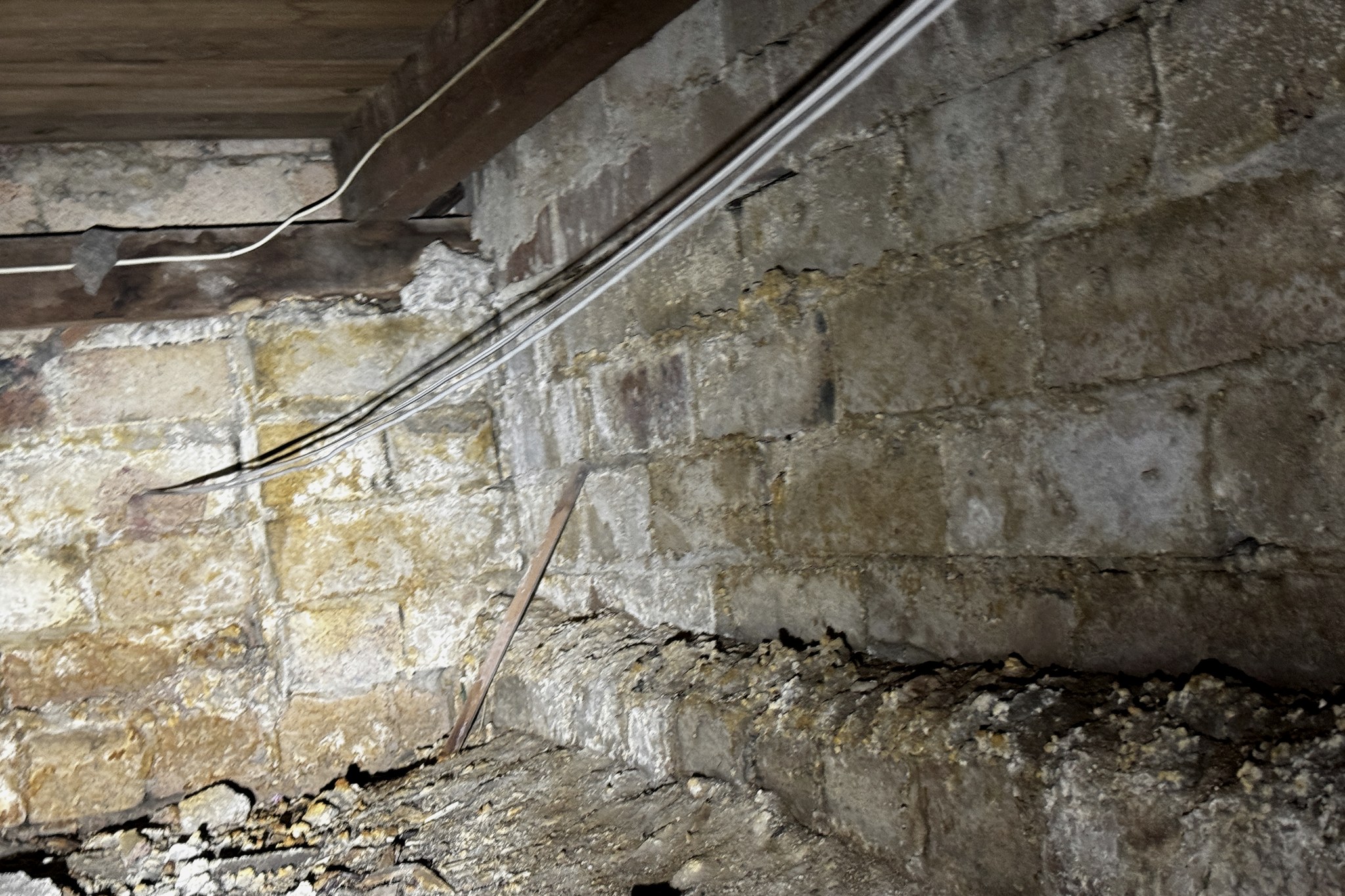
Follow the logic, because it is simple and it is the whole game. A stage payment is earned when the stage is complete. The contract defined base stage by reference to the footings and frame stage by reference to the frame being finished and approved. If the structural brick columns forming part of the base stage are substantially defective, the base stage is not complete. And a frame cannot be complete when it is sitting on a base stage that is not.
So one defect, low in the build, travelled upwards through every stage above it and removed the entitlement to be paid for any of them. Not reduced. Removed.
We spend a good part of our working week at base and frame stage, and the reason is exactly this. A defect found at that point is cheap to fix, visible, and still attached to a payment the owner has not made yet. The same defect found after handover is expensive, hidden behind finishes, and attached to money that has already gone.
05What that finding did to the builder's money
Three consequences, in order.
It is worth being precise about what this case does and does not decide. It does not say a homeowner can withhold a progress payment because they are unhappy. Whether a stage is complete is a question of fact, decided on evidence, and here it was decided by the President of VCAT after a trial and left undisturbed on appeal. What the case establishes is the principle: completion is a real test with real consequences, and a defect in the work of one stage can mean the stages built on top of it were never complete either.
06A claim for $365,746.78, valued at nil
The fallback, and why the evidence could not carry it.
Having lost the contractual route, the builder claimed $365,746.78 as the reasonable value of the work performed to termination. The way that figure was built is the reason it failed. It was particularised only days before trial, as a table of every invoice issued on the project, which the Court observed gave “no information as to the stage of the project that the invoice concerned, or whether the builder had been paid with respect to that work”. The table simply totalled the work, added 5% for preliminaries and 15% margin, and subtracted what had been paid.
The President declined to value the claim that way, and his third reason is the one that connects back to section 04:
“the nature and extent of the defects in the base stage and each of the frame stages … undermines any presumption that the invoiced amounts represent the value to the owners of the work.”
The conclusion was that “the benefit to the owners of the works undertaken by the builder and not paid for at the time of contract termination is nil”.
On appeal the builder argued the stage amounts in the contract should have been used to value the work. The Court's catchwords answer it in a line that is worth keeping:
“Amount of contractual entitlement to payment on completion of a stage is a ‘cap’ on amount recoverable, not a substitute for assessing the value of work done”. Then, separately: “Quantum meruit different to contractual damages”. And: “Builder’s evidence incapable of establishing value of the work done for which there was no contractual entitlement to payment”.
07The owners got an inspector in. He was right.
This is the part of the judgment we would most like every homeowner to read, and it is not in any summary of this case we have seen.
Relations had soured at a café near the site on 29 January 2018, where the owners accused the builder of fabricating and overcharging for excavation variation costs, which the builder denied. On 13 March the builder invoiced $160,000 for the first floor frame stage. What the owners did next is the whole point of this section.
On 17 April 2018 Mrs Dib emailed the builder and told him to stop:
“We’re requesting you not to proceed with any further work on our site as of today until further notice”
The builder's response tells you what that report was worth:
“In response to Mr Ryan’s report, the builder withdrew the first-floor frame stage payment claim and stated that it remained ready and willing to perform the works and to comply with its obligations under the contract.”
It did not stop there. On 13 July 2018 the registered building surveyor attended the site and directed the builder to fix work in respect of the frame stages. That is the free power we wrote about separately: a Direction to Fix, which costs you nothing. The surveyor returned on 27 July and approved the frame stages, and the builder then reissued its claims, $160,000 and $154,800 for the first and second floor frames, plus two further $10,000 cash claims under the side agreement. The owners did not pay them.
Then, on 8 August 2018, the builder issued a notice of intention to terminate. It set out four categories of breach. The second was refusing to comply with the contract, and the particulars given for that category included this:
the owners had “invalidly withheld payments on the basis that it proposes that an expert report to be obtained” in respect of the frame stages
We want to be careful here, because it would be easy to overstate it. The notice listed four categories and the expert report point is one particular within one of them. The judgment does not find that asking for a report caused the termination, and neither do we.
But set the sequence out and it speaks for itself. The owners engaged an inspector. He reported that the first floor frame stage was not complete. The builder withdrew that claim. The building surveyor then directed the builder to fix the frame work. The builder terminated, and sued for $729,112.03 in damages, or $365,746.78 on a quantum meruit as the alternative. And six years later the President of VCAT found substantial defects in the structural brick columns at base stage, with the consequence that the base stage and every frame stage above it were incomplete and the builder had never been entitled to be paid for any of them.

The inspector was right. The owners were right to stop paying. It took them from 2018 to 2026 and an appellate court to be told so, and the only reason they could prove any of it is that somebody independent went and looked while the frames were still open.
08What the owners lost, and why it stings
They did not win everything, and the way they lost is instructive.
The owners cross-appealed on two grounds. On the second, the refund of the cash, they succeeded and recovered $50,000 with interest. On the first, they argued the Tribunal had wrongly found that the builder, rather than the owners, validly terminated the contract. That ground never got a hearing on its merits.
Appeals from VCAT to the Court of Appeal run under section 148 of the Victorian Civil and Administrative Tribunal Act, and they are available only on a question of law. The Court held the termination ground was not one:
“Proposed ground alleging error in Tribunal’s findings concerning termination of contract was not on a question of law”, and therefore “No jurisdiction to entertain that ground of proposed cross-appeal”.
This matters to anyone contemplating a building dispute. A finding of fact made by the Tribunal, however strongly you disagree with it, is generally the end of the road. The appeal route exists for errors of law. Which means the evidence you put before the Tribunal the first time is very close to your only chance to establish what was actually built, and how badly. That is an argument for having the evidence gathered properly and early, not after a decision has gone against you.
09What this means if you are building right now
Six things, drawn from the judgment rather than from us.
One more thing while the build is still running. In Victoria the free remedy for non-compliant work during construction is a Direction to Fix, which costs you nothing and expires at the occupancy permit. And before any of this, it is worth taking two minutes to check the register before you sign.
This case was decided under Victorian legislation in a Victorian court. Every state has its own domestic building legislation and its own limits on what a builder may demand and when. The principles about completion and evidence travel. The section numbers do not.
The Court of Appeal returned to building disputes again in August 2026. In another Court of Appeal building decision, it considered what a homeowner may safely say in public about their builder, and who is treated as publishing the replies underneath.
10Sources
Every quotation on this page is taken from the judgment itself, read in full on 15 August 2026.
General information, not legal advice. Every fact and every quotation in this article is drawn from the reasons of the Court of Appeal in A.M.O. Rifat Holdings Pty Ltd v Dib [2026] VSCA 124, delivered 4 June 2026, a concluded appellate judgment. Where the judgment quotes the reasons of the President of VCAT below, it is quoted here as the Court of Appeal reproduces it. The legislation discussed applies in Victoria; other states have their own domestic building legislation and their own limits on what a builder may demand and when. Whether any particular stage of your build is complete is a question of fact that depends on the work and the contract, so get advice on your own situation.
Our Blog
YOUR GO-TO RESOURCE HUB
Whether you’re on the hunt or have already settled in, we’ll arm you with the know-how and confidence to keep your home safe and compliant. With our guidance, you can make informed decisions and steer clear of common pitfalls.